JLo Turns the Joke Into the Paycheck: Why Her Engagement Ring Deal Is the Ultimate Latina Flex
What’s more Latina than turning heartbreak into a side gig that pays eight figures and keeps you center stage in your own story?
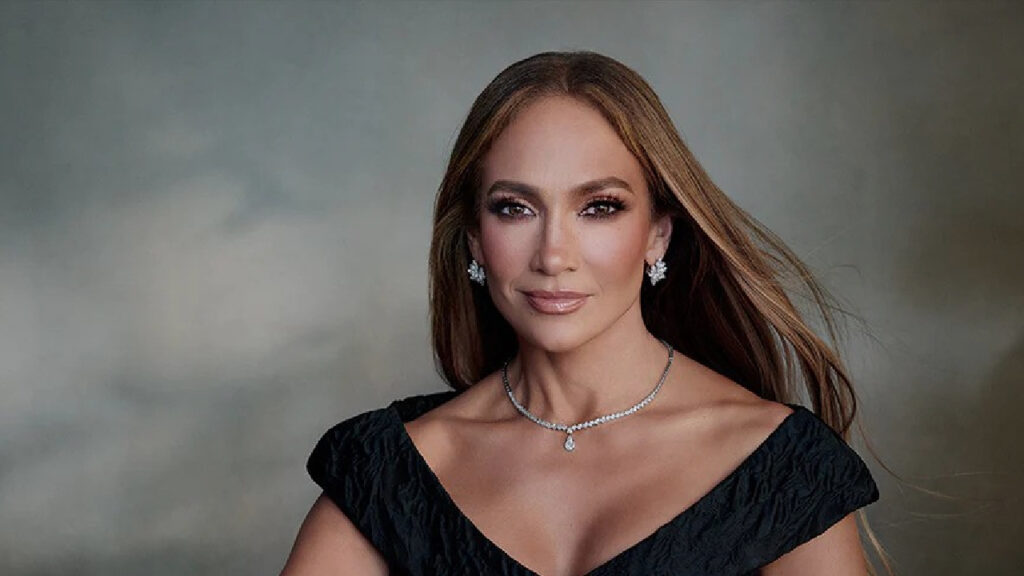
Jennifer Lopez has spent decades watching tabloids turn her love life into a public spectacle. Now she is cashing that spectacle out in diamonds. After six engagement rings, four divorces, and one very public split from Ben Affleck, she just became the global face of Turkish jewelry brand Zen Diamond, fronting its campaign for engagement rings and serious sparkle. Lopez’s new role as “engagement ring ambassador” earned her a reported ten million dollar paycheck and marks “a new chapter in J.Lo’s ongoing evolution.”
While other outlets mock the irony, our read is simple: A Boricua from the Bronx saw how the world profited from her romantic life. So she found a way to own the narrative and the check.
Why Jennifer Lopez’s new campaign is the plot twist we should have seen coming
From the outside, the move looks like a meme in human form: A woman with six engagement rings models even more engagement rings. Page Six calls her a “four-times-divorced diva” and reports that Zen Diamond pays her ten million dollars for the campaign. Their source insists that this fee is “low” compared with past endorsement deals that reached $20–$50 million.
Yet if you zoom out, the casting makes perfect sense. HOLA! notes that Lopez’s personal life has long been “intertwined with the cultural mythology of engagement rings,” from the early Bennifer era in the 2000s to her rare green diamond from Affleck that experts valued at “well over five million dollars.”
The story that surrounds her has always involved rings. They trend on social media, drive headlines, and fuel gossip about whether she loves love too much. So when Zen Diamond chairman Emil Guzelis describes her as “more than an international icon” and says she “represents power, authenticity and timeless beauty,” the campaign does something subtle: It turns the object the culture uses to clown her into a commodity she controls.
The media turns her heartbreak into a punchline
Predictably, the internet reacted with jokes. Some fans immediately cast Lopez as a curse on the very engagement rings she promotes. The Daily Mail leans into the same punchline and frames the deal as “unexpected” because Lopez has “been married and divorced four times.” Their coverage centers the irony, not the work.
We have seen this pattern before. When Jennifer Lopez and Ben Affleck’s second attempt at marriage crumbled, tabloids rushed to cast her as the problem. Coverage described her as “very difficult” or a woman who “has a hard time feeling satisfied,” while Affleck came off as the weary husband who tried his best. The narrative rewarded his brooding and punished her ambition.
Yet Lopez herself has always framed this chapter in different terms. In a recent interview, she explained that life has no “arrival point,” only growth. “It’s either growing or dying, and I don’t want to do the dying part,” she said. She described her reunion with Affleck as a test she thought she had already passed and admitted that when “your whole house blows up,” you stand in the rubble and ask how to avoid repeating the same lesson.
That is the woman the jokes erase. A woman who looks at the ruins, audits her own patterns, and still walks back into the light in a strapless white dress, this time as the one selling the fantasy rather than starring in it for free.
How Jennifer Lopez flips the script on failure
The Page Six framing suggests Lopez grabbed the Zen Diamond deal because she “wants to stay in the news” and is “doing anything to stay relevant.” That read assumes desperation. It ignores the reality of a woman who has built a career that spans music, film, television, beauty, fragrance, and fashion, and who already has more money than she can spend.
What if the move means something else?
Lopez knows how brutally the culture polices women who age in public, especially Latinas. She knows that divorce, especially multiple divorces, still carries moral judgment in many of our communities. She also knows that the spectacle of her rings keeps trending, whether she gets paid or not.
So she steps into a campaign that pays eight figures. She poses in bridal white and black evening gowns surrounded by diamonds, while Zen Diamond aligns itself with her stamina and spectacle. She models several engagement ring styles, along with necklaces, bracelets, and earrings, all framed through an ultra-glam lens.
Suddenly, the storyline shifts. The rings stop serving as evidence that she “failed at love” and start serving as proof that she can monetize the same narrative used against her. In a culture that tells women to hide their breakup scars, Lopez turns those scars into brand equity.
That is what Latina resilience often looks like: You get dragged for your choices, then you invoice.
Latina survival, side gigs, and the price of staying visible
There is still a cost. Feminist media critics keep pointing out how hard it is for a Latina star to age in public without becoming a target. When Lopez canceled her “This Is Me… Now” tour and pulled back for a while, she described that period as “the hardest time of my life,” but also “the best time” because she could finally do the work on herself. She emphasized that she needed to build happiness from within, not from a partner.
That context matters when you watch her step into an ad campaign that everyone knew would draw scrutiny. Insiders say she “knew what the blowback would be” over the engagement ring campaign, “but she seemingly doesn’t care.”
Of course she cares. She has said many times that cruel headlines still hurt. She has also said she refuses to let them define her. That tension sits inside every frame of the Zen Diamond photos. The culture tries to reduce her to a punchline about rings. She responds by turning those rings into salaried symbolism.
For many Latinas, that instinct feels familiar. You take the thing people weaponize against you, and you turn it into a job, a project, a paycheck, a platform. Just ask Shakira.
Jennifer Lopez did the same at a global scale. She took the object that had haunted her public life and put it under a ring light with a contract attached. The world can keep asking whether she is “a good candidate” to sell engagement rings. She already answered in the only language that matters to an industry that tried to humiliate her: She signed the deal.