Why Cardi B Wearing a Hijab in Saudi Arabia Showed What Cultural Respect Looks Like
If there’s one thing Latinas understand instinctively, it’s how to behave when you enter someone else’s home.
That lesson gets passed down quietly: you respect the rules of the house, observe before you speak, and listen. You honor the culture in front of you, especially if your own community knows what it means to be misunderstood.
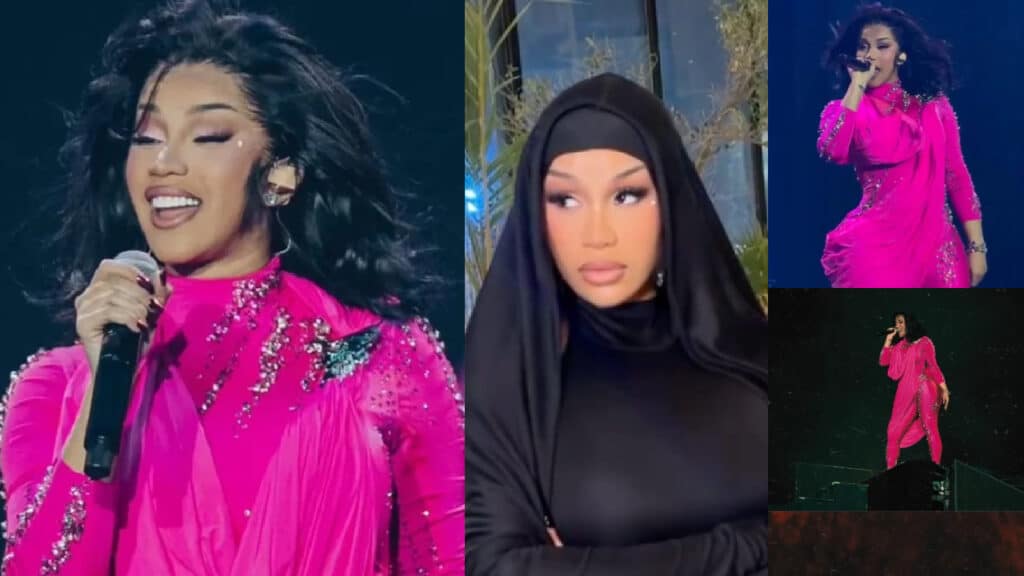
So when Cardi B arrived in Saudi Arabia wearing a hijab, an abaya, and a custom couture look designed around modesty, we immediately saw something others missed: it wasn’t about wearing a costume. It was cultural literacy.
And in a moment shaped by global Islamophobia, that distinction matters.
Cardi B’s Saudi Arabia Debut Was Intentional, Not Accidental
Cardi B made her first-ever performance in Saudi Arabia at MDLBeast Soundstorm 2025 in Riyadh. According to Women’s Wear Daily, she closed out the festival wearing custom Gaurav Gupta Couture, a look specifically designed to meet cultural expectations while preserving her signature theatricality.
The Grammy-winning artist performed in a sculpted neon pink bodysuit with a hooded silhouette, layered cape, and built-in boots, adorned with cascading ghungroos and crystal embellishments. Gupta told WWD that the goal was “to do something that is quite modest, but also bold and really represents her.”
Her stylist, Kollin Carter, worked with Gupta months in advance to create a look that respected Saudi cultural norms without erasing Cardi B’s identity.
Cardi B Greeting the Crowd With “As-salamu alaykum” Was a Choice
On stage, Cardi B opened her 80-minute set with “As-salamu alaykum,” a traditional Arabic greeting meaning peace be upon you. She later told the crowd, “Thank you for having me in your country. Everything is mashallah,” according to Women’s Wear Daily.
Offstage, she leaned fully into the experience. In Instagram videos, she praised Saudi hospitality, calling the country “luxurious” and saying, “The people over here is hip, honey. They are very polite. They don’t look at you like you’re poor.”
She posted a photo of herself shopping in Riyadh wearing an abaya. In another video, she joked about training for her upcoming tour while jogging on a treadmill in a hijab.
“We in Saudi Arabia baby,” she said, wearing an abaya and hijab. “I told you, after giving birth I gotta get ready for the Little Miss Drama Tour.”
She ended the clip with a cheerful “Mashallah.”
According to People, the video wasn’t scripted branding. It was Cardi B being Cardi B, fully present and culturally aware.
Why Cardi B’s Hijab Matters in a Time of Islamophobia
In a post-9/11 world where Muslim communities continue to face surveillance, vilification, and violence, public gestures toward Islam often get flattened into spectacle or controversy.
Cardi B’s appearance in a hijab did something quieter: it normalized respect.
She did not exoticize Muslim culture, nor did she frame modesty as oppression. She treated Saudi Arabia as someone else’s home and adjusted accordingly.
That approach stands in sharp contrast to how Muslim dress is often discussed in Western media, where hijabs and abayas get framed as symbols to debate rather than lived realities to respect.
Cardi B and the Long History of Respectful Cultural Dressing
Cardi B is not the first non-Muslim celebrity to dress modestly in Muslim-majority countries. Paris Hilton wore an abaya at the Sheikh Zayed Grand Mosque in Abu Dhabi. Kate Middleton covered her hair during visits to mosques in Pakistan. Angelina Jolie has worn Islamic headscarves during humanitarian visits.
What separates Cardi B is transparency: she didn’t frame her look as fashion tourism. She explained it through behavior, greeting people properly. She used the language and observed the norms without irony.
As one fan wrote on Instagram, “She understood the assignment and rewrote it.”
Latinas Have Practiced Cultural Respect Long Before It Was Trending
For many Latinas, Cardi B’s actions felt familiar.
Latino communities understand what it means to live between cultures. Migration teaches you quickly when to adapt, when to listen, and when your presence carries responsibility.
Despite enduring racism, xenophobia, and erasure, many Latinas grow up learning how to honor traditions that are not their own. You remove your shoes if you have to. You dress appropriately, learn the greetings, and don’t center yourself.
Muslim Latinas Have Been Doing This Work Quietly for Years
The conversation around Cardi B’s hijab also opened space to remember a truth often ignored. Latinas are not outsiders to Islam.
According to estimates by the American Muslim Council of Chicago, roughly 200,000 Latinos in the United States identify as Muslim. Many are women.
In a 2024 FIERCE interview, Latina Muslims spoke about faith, liberation, and identity. Wendy Díaz, a Puerto Rican Muslim writer and educator, told us that wearing hijab made her feel empowered rather than constrained.
“When I began wearing hijab, I felt empowered like never before,” she said. “I didn’t feel compelled to flaunt my body as a means to get ahead.”
Others echoed that sentiment, describing Islam as a source of discipline, peace, and autonomy rather than restriction.
Their stories complicate the idea that hijabs symbolize submission. For many Latina Muslims, modesty is a choice, an act of agency, and spiritual clarity.
Cardi B’s Gesture Lands Differently When You Know This History
Cardi B did not claim Muslim identity. She did not speak for the culture nor flatten the experience into branding.
She respected the space she entered.
That distinction matters deeply to communities that have watched their faith reduced to fear narratives for decades. It also matters to Latinas who recognize cultural humility when they see it.
And for many Latinas, Muslim or not, that gesture spoke volumes.