From El Palacio de Bellas Artes to Las Flans, Karol G’s “La PremiEre” Is Full of References You Probably Missed
For nearly an hour, Karol G did something rare in pop music: she paused momentum and looked backward with intention.
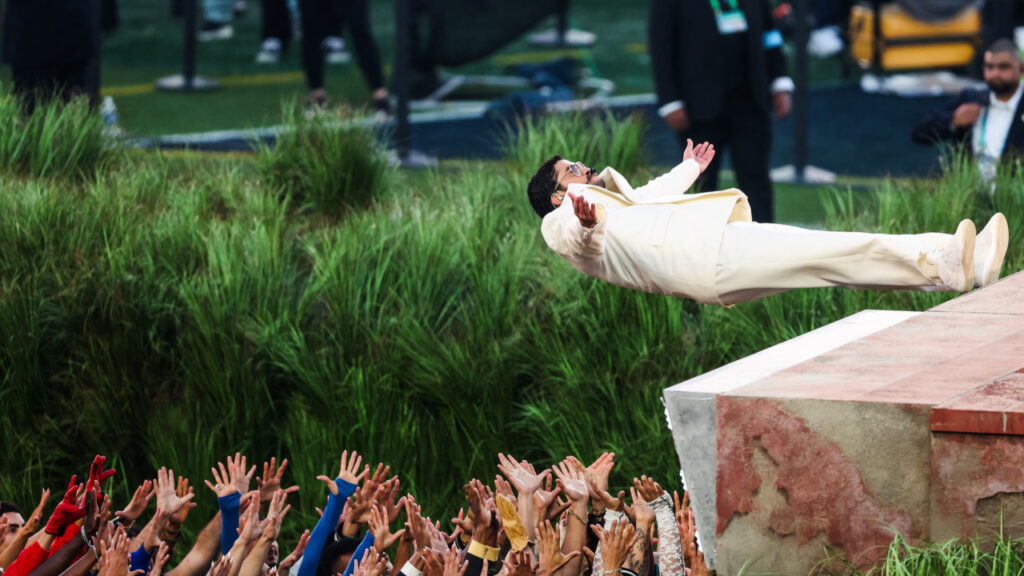
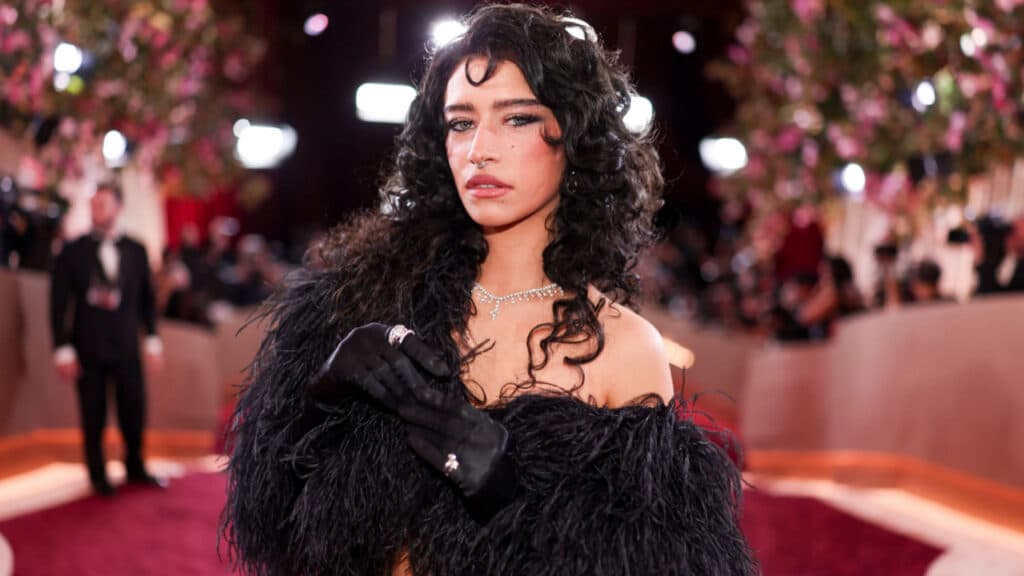
Released on YouTube on December 10 and first broadcast on television in more than 60 countries, La PremiEre accompanies Karol G’s Tropicoqueta album with a visual special that reads more like a curated cultural archive than a concert film. The project unfolded through references to 1990s Latin American television, iconic vedettes, legacy performers like Marco Antonio Solís, and legendary hosts such as Don Francisco. Yet, that only scratches the surface.
What La PremiEre ultimately offers is a meditation on Latin American music history and collective memory. Karol G cites her influences and stages them. She inhabits those who came before and threads her own story through decades of sound, image, and longing that shaped how Latin music learned to see itself.
How Karol G Uses Television Memory as a Cultural Language
From its opening moments, La PremiEre situates itself inside the visual grammar of Latin American television. Don Francisco introduces the special, a symbolic gesture that connects Karol G’s present to the era when variety shows shaped regional taste and access.
The VHS aesthetic of “Cuando Me Muera Te Olvido” evokes programs like Siempre En Domingo and Sábado Sensacional, TV shows that became cultural meeting points. By recreating their textures and pacing, Karol G frames nostalgia as a shared language rather than a marketing trick.
The on-screen messages that appear during her performance of the Spanish version of “Papasito” recall early music channels, when audience participation felt tactile and communal. While the technology looks dated, the emotional pull does not.
Karol G’s homage to Latin pop sits at the intersection of spectacle, memory, and gendered performance.
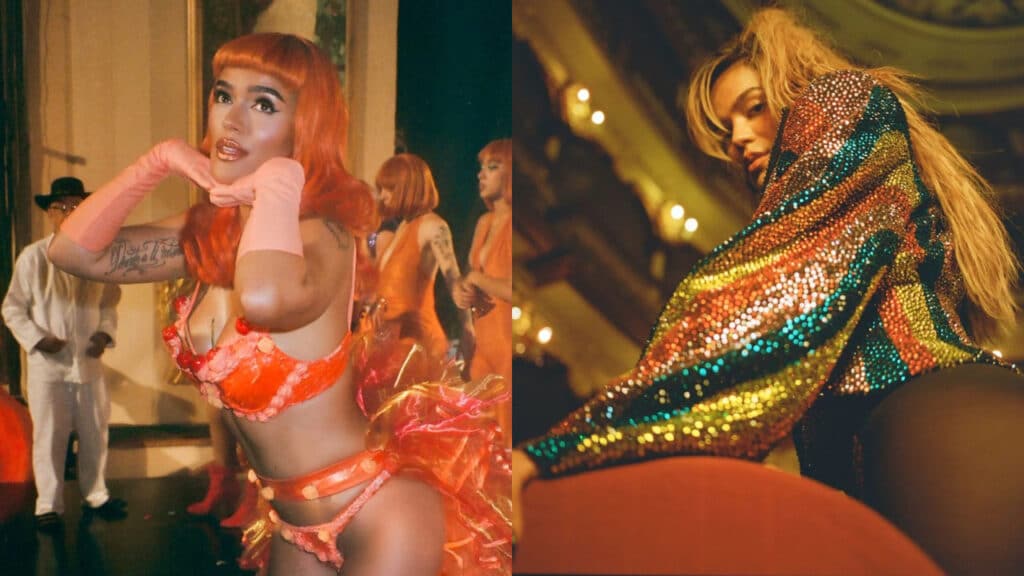
Groups such as Las Chicas del Can and Las Flans defined a pivotal era when Latina women dominated televised pop through synchronized choreography, hyper-feminine styling, and carefully constructed accessibility. These acts thrived in a media ecosystem shaped by variety shows, weekend countdowns, and prime-time musical specials, where performance relied on visual codes as much as sound.
In La PremiEre, Karol G mirrors that lineage through costuming, lighting, and ensemble staging that evoke the glossy theatricality of late 1980s and early 1990s Latin pop. The result reads as intentional citation rather than aesthetic borrowing. She situates herself inside a tradition where women claimed mass appeal without abandoning softness, glamour, or emotional directness.
Her nod to Thalía sharpens that lineage further. Thalía emerged as a singular figure who bridged telenovela fame, dance-pop performance, and transnational stardom in the 1990s. She represented a model of Latina visibility that moved fluidly between television, music charts, and cultural symbolism, particularly for young women navigating identity across borders. In La PremiEre, Karol G echoes this legacy by blending pop theatricality with narrative continuity, collapsing distinctions between performance and persona.
According to interviews Karol G has given about Tropicoqueta, she has framed the project as an act of gratitude and remembrance. That framing aligns with her deliberate placement inside a lineage of women who built Latin pop before streaming, before algorithms, and before crossover became a prerequisite. By invoking Las Chicas del Can, Flans, and Thalía, Karol G positions herself as both inheritor and archivist of a genre shaped by women who learned to command spectacle long before global visibility was guaranteed.
The Legacy of Latina Vedettes and Cabaret Culture
Tropicoqueta openly pays homage to vedette culture, and La PremiEre expands that tribute visually. In the showgirl-driven segment for “Tropicoqueta,” Karol G appears alongside Lyn May, La Tigresa del Oriente, and Valeria Valensa. Similarly, Blue Demon Jr. joins the scene, grounding the performance in popular culture.
This moment draws from the tradition of ficheras films and cabaret aesthetics, genres often dismissed or moralized despite their deep influence on Latin American performance. By centering these women, Karol G reframes the vedette not as spectacle but as lineage. She does not sanitize the past. Instead, she restores its complexity.
Karol G’s Mexico Is Musical, Emotional, and Historical
Mexico appears throughout La PremiEre as a musical and emotional anchor. Karol G performs “Ese Hombre Es Malo” wearing a charro-inspired dress, visually referencing Rocío Dúrcal, the Spanish singer beloved for her ranchera interpretations.
The ranchera segment expands into orchestral arrangements that recall the genre’s greats, including Juan Gabriel and Dúrcal herself. The choice signals reverence rather than reinvention. Karol G positions herself as a listener first, an inheritor rather than a disruptor.
Karol G’s Mexican chapter carries a quieter but no less radical citation. Her visual language evokes El Palacio de Bellas Artes, a venue long treated as a sanctuary for “high culture,” and, by extension, Juan Gabriel’s 1990 concert there, a performance that almost never happened.
Intellectuals and members of the cultural elite mounted fierce opposition to the idea of a popular singer occupying the country’s most prestigious arts institution, arguing that Juan Gabriel represented a vulgarization of the space. Juanga refused to retreat. “No tengo dinero, pero tengo talento y ganas de hacer historia,” he reportedly said at the time, as protests, threats, and attempted boycotts followed.
The concert sold out. Tickets reached resale prices. The president attended. What unfolded that night redefined Bellas Artes itself, proving that popular music belonged in the nation’s most revered halls. By invoking this moment through orchestral ranchera arrangements, costuming, and staging, Karol G aligns herself with a lineage of artists who challenged cultural hierarchies and insisted that emotion, talent, and collective memory carry as much artistic weight as academic approval.
Colombia Lives in the Details Karol G Refuses to Erase
Beyond genre homage, La PremiEre grounds itself in Karol G’s Colombian identity through quieter symbolism. Visuals evoke vallenato’s emotional weight, street refreshment stands, and the presence of military structures that have shaped daily life in Colombia.
The inclusion of a hotline aesthetic references the era of call girls and the culture of video messaging in Colombia. This detail connects to Karol G’s own beginnings, recording TV commercials, placing her personal trajectory inside a broader media ecosystem.
Karol G and the Long Road to Crossover Without Erasure
Several performances trace Latin pop’s movement toward global markets. References to Shakira’s World Cup era and the rise of urban crossover situate Karol G within a lineage of artists who navigated English language visibility without abandoning accent or identity.
The English language moments in La PremiEre carry audible texture. Karol G does not neutralize her voice. She lets it travel.
When Karol G Revisits MTV Unplugged and Intimacy
The special also nods to the importance of MTV Unplugged in Latin America, a format that once legitimized intimacy, musicianship, and vulnerability for artists across the region. In revisiting that sensibility, Karol G slows the spectacle and foregrounds connection.
Street and neighborhood music aesthetics reinforce this intimacy.
Karol G Ends La Premiere With Gratitude and Continuity
Toward the end of the special, Karol G turns explicitly reflective. “So many generations united listening to my music,” she says. “The nostalgia that people can feel when listening to one of my songs is completely magical.”
The statement functions as both observation and thesis. Tropicoqueta is currently nominated for the 2026 Grammy Awards. Yet La Premiere suggests that recognition was never the primary goal. Instead, Karol G builds a bridge. Between eras, formats, memory, and momentum.
She arrives at the present without cutting herself off from the past. And in doing so, she reminds us that Latin American music has always been collective. It has always been visual. It has always been haunted by the joy of remembering together.