UN Data Exposes a Global Emergency: Domestic Violence Kills 137 Women a Day, With Latinas at High Risk
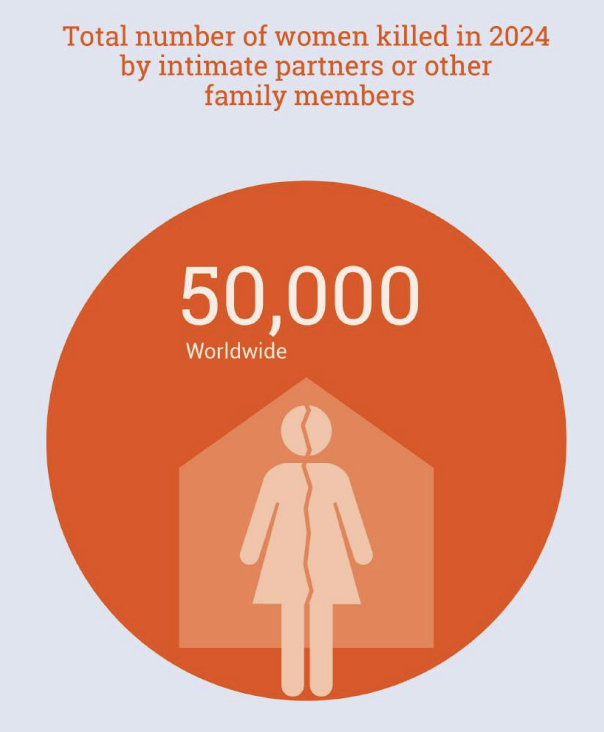
The UN’s global overview of femicide reveals a reality that feels both familiar and urgent. Every day in 2024, an average of 137 women and girls were killed by someone inside their own home. According to the UNODC and UN Women report Femicides in 2024, nearly 50,000 victims died at the hands of intimate partners or other family members. That number makes the private sphere the most dangerous place in the world for women.
Latinas across the U.S. and Latin America know this reality intimately. They often navigate underfunded protection systems, cultural silence, immigration fears, and legal barriers that make domestic violence impossible to escape. The UN report provides global numbers. The lived reality of Latina women fills in the rest.
The scale of Domestic Violence that the UN says the world keeps missing
According to the UN report, 60 percent of all intentional killings of women and girls in 2024 happened inside the home. The report estimates 50,000 victims globally, out of 83,000 intentional killings of women and girls that year.
Africa recorded the highest number of victims. Yet the Americas continue to face one of the highest rates of intimate partner and family femicide: 1.5 per 100,000 women. Only Africa recorded a higher rate at 3 per 100,000.
These numbers matter for Latinas. Many countries in Latin America sit inside the Americas region, and the U.S. Latino population often experiences overlapping vulnerabilities rooted in ethnicity, immigration status, and economic instability. The UN attributes the killings to patterns of gender inequality, coercive control, and years of unaddressed violence that escalate until a partner or family member kills the woman.
Domestic Violence and the impact on Latinas across the Americas
The UN report shows that 69 percent of women killed by intimate partners or relatives in the Americas died at the hands of a current or former partner. Europe shows similar patterns at 64 percent, but the Americas carry a heavier rate overall.
When we look specifically at Latina communities, the data doesn’t exist at the granularity needed. The UN acknowledges this gap, reporting that “the availability of data on femicide perpetrated beyond the private sphere continues to remain very limited” and that many countries cannot produce complete numbers on gender-related killings outside the home.
Yet community advocates and researchers in the U.S. and Latin America point to realities that align with what the UN describes:
- Domestic violence escalates in households where reporting feels risky.
- Immigration status often affects a survivor’s willingness to seek help.
- Latina women face higher rates of intimate partner homicide in several U.S. states, according to local crime data.
- Family dynamics can silence victims when cultural expectations discourage “breaking up the home.”
The UN’s finding that male partners commit most of these killings in the Americas mirrors what Latina organizations have tracked for years.

Inside the UN’s numbers on Domestic Violence and how the danger builds over time
The report explains that femicide rarely comes out of nowhere. According to UNODC and UN Women, these killings often represent “the culmination of pre-existing forms of gender-based violence” that escalate into lethal attacks.
Researchers cited in the report identify specific risk factors, including:
- A documented history of violence
- Previous threats
- Attempts to separate from the partner
- Stalking behaviors
- Coercive control
- Access to firearms
- Alcohol use combined with stressors
For Latina victims in the U.S., firearm access plays a central role. Several American states with high Latino populations also have weaker firearm restrictions, a pattern that increases lethality for intimate partner violence survivors. The UN cites research showing that firearm possession by abusers “significantly increases the odds of a killing” and raises the chance of multiple victims by 70 percent in domestic homicides.
Domestic Violence data remains broken. That leaves Latina victims invisible
The UN report acknowledges a major problem: the world still struggles to measure the full scale of femicide. According to the UN, most countries cannot yet produce reliable data on gender-related killings outside the home. Even within the home, data gaps remain widespread across Latin America, the Caribbean, Africa, and Asia.
The report states that “the availability of femicide data in most countries remains a challenge,” and that even the numbers presented should be interpreted as “indicative of overall magnitude rather than precise values” because missing data forces researchers to impute national estimates.
This matters for Latinas because incomplete data means incomplete protection. Police departments, health systems, and courts often fail to coordinate reporting. As a result, survivors move through systems designed without accurate knowledge of the danger women face.
The Americas show no real decline in Domestic Violence killings, according to the UN
The UN report tracks trends from 2010 to 2024 in the only two regions with enough data: the Americas and Europe. Europe shows a slow decline. The Americas do not.
According to the report, the rate of intimate partner and family femicide in the Americas “remained relatively stable between 2010 and 2024” despite years of activism, legal reforms, and public campaigns.
This plateau sits alongside local data from Latin America showing rising gender-based violence complaints and, in some countries, growing femicide rates during political instability or economic downturns.
Domestic Violence prevention requires cultural, legal, and community change
The UN outlines prevention strategies that have worked around the world. These include:
- Legal recognition of femicide
- Specialized police and prosecution units
- Multi-agency responses
- Protection orders with firearm restrictions
- Public campaigns like “Ni Una Menos.”
- Feminist organizing
- Stronger data systems
- Early risk assessments to intervene before violence escalates
The report highlights Spain as a model, where long-term risk evaluation tools and coordinated police protection have reduced lethal outcomes.
Many Latina advocates in the U.S. and across Latin America call for these same reforms, especially firearm removal, bilingual legal support, community-led prevention, and migrant-safe reporting systems that do not trigger immigration-related fears.
Domestic Violence keeps killing Latinas. The UN numbers show the urgency
The UN stresses that an average of 137 women and girls lost their lives every day in 2024 to a partner or family member. According to the report, “The home continues to be the most dangerous place for women and girls in terms of the risk of homicide.”
For Latinas, that danger intersects with cultural stigma, systemic failures, racial inequities, and immigration barriers that often keep violence hidden until it becomes fatal.
The data confirms what many survivors already know: femicide does not arrive suddenly. It builds. It escalates. And without early intervention, it kills.